BFPCA Media Release, 10 July 2026
- BFPCA warns Airservices Noise Action Plan is not just a failure for current flight-path communities, but a warning to all of Greater Brisbane: Brisbane Airport is being prepared for Independent Parallel Runway Operations, effectively enabling two runways to operate independently in one location.
- Airservices’ claim that 140,000 residents will be “spared” aircraft noise is misleading: it is based on modelled population counts inside narrow flight-path corridors, not actual noise exposure, flight frequency, sleep disturbance, or health impacts.
- The only immediate changes are limited arrival-path adjustments: many headline benefits are future options, rejected proposals, or modelling artefacts – not real relief being delivered now.
- Aviation consultancy Trax International identified 49 possible improvement opportunities in 2022, yet four years later Airservices list only four actions as implemented, with many others not progressed, still under review, deferred, or reduced to process language.
- Airservices Noise Action Plan Package 3 delivers no curfew, no cap, no guaranteed over-water operations, no enforceable noise limits, and no health-based reduction in aircraft noise harm.
Brisbane Flight Path Community Alliance (BFPCA) has warned that Airservices Australia’s Package 3 announcement is not merely a disappointing result for existing flight-path communities, but a stark warning to all of Greater Brisbane.
Airservices is presenting Package 3 of the Noise Action Plan for Brisbane as aircraft noise relief, while the deeper structural outcome is preparing Brisbane Airport for Independent Parallel Runway Operations (IPRO) from around 2027.
IPRO will allow aircraft to land simultaneously and independently on both runways. BFPCA says this effectively moves Brisbane Airport towards operating as “two airports in one location”, increasing runway throughput, supporting airport and airline growth aspirations, and expanding the risk that aircraft noise will spread further across Greater Brisbane over time.
Today’s heavily affected suburbs are the early warning system for the rest of the city. Once the airspace architecture is set up for higher throughput, pressure for more flights will grow, and communities not currently engaged in the aircraft noise debate may find themselves affected in future.
Airservices has claimed that Package 3 will spare 140,000 residents from aircraft noise. BFPCA says this is a misleading headline figure because Airservices’ own methodology counts estimated population within a narrow 2 km flight-path corridor – 1 km either side of a notional centreline – rather than measuring real-world noise burden, flight frequency, sleep disturbance or health impacts.
This means one person exposed to 100 flights a day is counted as one person, while 100 people exposed to one flight each are counted as 100 people. The metric does not capture flight frequency, aircraft type, altitude, night-time disturbance, cumulative exposure from arrivals and departures, or health impacts.
The only changes going live immediately are limited over-land arrival-path adjustments. Many of the claimed benefits are future options, rejected proposals, or modelling artefacts. The announcement does not deliver a curfew, a cap, guaranteed over-water operations, enforceable noise limits, or a health-based reduction in aircraft noise harm.
By contrast, as part of Minister Catherine King’s approval of Melbourne Airport’s third runway, Melbourne Airport is required to undertake an independent long-term Community Health Study into the impacts of aircraft noise. That study will collect baseline data before third runway operations begin and continue annual monitoring for 20 years. If health-based aircraft noise assessment can be required in Melbourne, it should be done in Brisbane, too.
The Package 3 outcome also needs to be judged against the 2022 Trax International review. Airservices spent more than half a million dollars on Trax who identified 49 potential improvement opportunities for Airservices to investigate. Four years later, Airservices’ Package 3 material lists only four Package 3 actions as implemented, while many others are not progressing, remain under review, are deferred to future implementation, or have been absorbed into process and design-principle language.
BFPCA also noted that during the Senate Inquiry into aircraft noise, Airservices Deputy CEO Peter Curran stated that Airservices would do “as little as possible” – a statement recorded in Hansard (page 51) from the Canberra hearing on 20 September 2024. BFPCA says Package 3 shows Airservices has delivered on that promise.
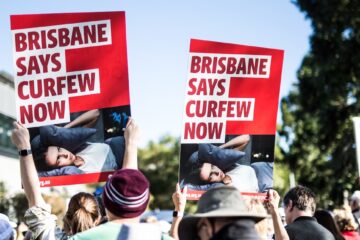
BFPCA says Greater Brisbane now deserves a serious public debate about whether unrestricted 24/7 airport growth is compatible with a liveable city, and whether Brisbane residents should continue to be denied the same protections afforded to communities around airports in Sydney, Adelaide, Essendon and the Gold Coast.
Quotes Attributable to Prof. Marcus Foth, BFPCA Chairperson
“Package 3 is not just a disappointing outcome for today’s flight-path communities. It is a warning to all of Greater Brisbane.”
“Airservices is dressing this up as noise relief, but the real story is capacity. Brisbane Airport is being prepared to operate like two airports in one location.”
“Once Independent Parallel Runway Operations are enabled, Brisbane Airport will have the airspace architecture it needs for simultaneous independent landings on both runways. That is an airport and airline growth measure being sold to the public as community relief.”
“The claim that 140,000 residents will be spared aircraft noise is marketing spin. Airservices is counting people inside a modelled corridor, not measuring actual aircraft noise, sleep disturbance, frequency of overflights, or cumulative health harm.”
“Melbourne gets a 20-year independent health study. Brisbane gets a spreadsheet.”
“Trax identified 49 possible improvement opportunities in 2022. Four years later, Airservices’ own Package 3 outcomes show only four Package 3 actions implemented, with many others not progressed, still under review, or pushed into future work. That is not a comprehensive noise fix.”
“Airservices promised to do ‘as little as possible’, and that is exactly what Brisbane communities have received: no curfew, no cap, no guaranteed over-water operations, no enforceable noise targets, and no health-based reduction in aircraft noise harm.”
About BFPCA
With the launch of Brisbane Airport’s New Parallel Runway on 12 July 2020 came a new airspace design and flight paths that concentrate aircraft noise over densely populated residential areas.
Brisbane Airport and Airservices Australia sold this project to Brisbane communities suggesting the New Parallel Runway will enable them to prioritise “over water” operations that direct planes away from residential areas. The CEO Gert-Jan de Graaff is on the record saying, “the net effect of aircraft flying over the city will decrease.”
Brisbane families and communities are suffering from excessive noise pollution and associated health and related impacts from Brisbane Airport’s new flight paths launched in July 2020. The Aircraft Noise Ombudsman report, the Brisbane Airport PIR Advisory Forum (BAPAF) and flight path design consultants TRAX International have all confirmed that Brisbane communities were misled using flawed noise modelling, deceiving community engagement, and offered inadequate noise abatements.
Brisbane Flight Path Community Alliance (BFPCA) came together in 2020 to fight back on behalf of all Brisbane families and communities experiencing this noise pollution.
For more background information, visit: https://bfpca.org.au/